

I’m Stephanie, a writer of fiction, creative nonfiction, and personal essays. From the Interstices is my newsletter where you’ll find short stories, lyric essays, and other personal essays like the one that follows. Interested in reading more of my work?
I wrote the short story linked below in the summer of 2024 as part of the “Same Walk, Different Shoes” community writing project organized by Ben Wakeman. I believe Ben referred to it as a kind of exercise in empathy. The story I ended up writing was my fictional interpretation of a brief prompt, stripped of personal details, from another anonymous writer’s life. I wrote about a Nebraska family of corn growers. The story seemed to take on a life of its own (cliché, but that’s how it felt and maybe that was because it came from a prompt based on someone else’s lived experience). The more I wrote, the more I felt sure that what I was writing was a fractal of a larger story, and that while the story I was writing was made up, it was true. I also did a bit of research in order to write the story, and what I found confirmed those feelings. And I guess I have more I want to say about it.
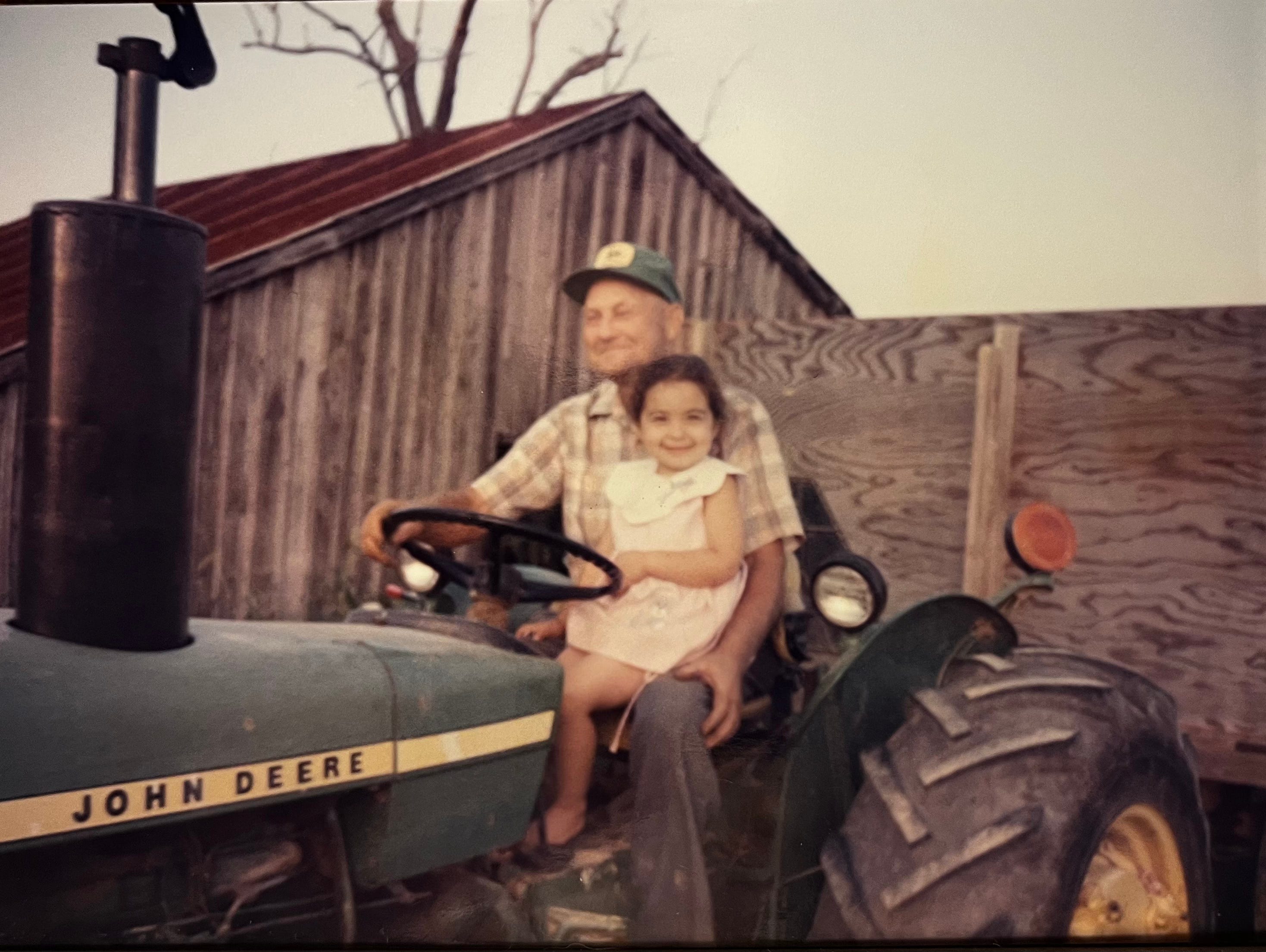
My great-grandfather was a tobacco farmer in Southern Maryland. He also crabbed and fished, grew vegetables and melons, and before I came along, had some animals. But tobacco was the cash crop, the one that made him and his family a living. I got to know him for twelve years before he died. I loved him, and was loved by him, very much. I was too young when he was still alive to understand the immense physical labor involved in running a small family farm. I only knew that when I tried to take the dollar bills he liked to offer me in his closed fist for a laugh, his hand was a steel vise no amount of prying could wrestle open. I didn’t understand the finely calibrated combination of business acumen and gambler’s spirit and sheer luck you’ve got to have to make it season to season, boom year to bust. I only knew that my grandmother said they never went hungry because they grew or raised everything they ate right there on the farm. I knew he carried crisp $100 bills in his beat-up leather wallet, I didn’t realize that other grown-ups carried credit cards.
Maryland’s main agricultural crop used to be tobacco. That’s a whole other story. Following a Big Tobacco settlement, Maryland farmers were offered buyout payments to stop growing tobacco, along with education and assistance with diversifying and pivoting to other market-driven crops. Granddaddy took the buyout, ended up farming mostly soybeans and also corn. In the final years of his life, he stopped farming altogether, with the exception of his vegetable patch, renting out his field to another farmer.
I’m certain my granddaddy would’ve voted for the current regime. Most farmers did. Farmers who are hurting, wondering why everything keeps getting worse, farmers who are once again, only a few years after the last time, feeling the ramifications of a trade war kicked off by tariff policies. Once again, they’re being offered a one-time payout from the USDA’s Commodity Credit Corporation — take this check and stop complaining and give me your vote. And maybe they will. It’s worked before.
When I wrote the story, I almost published it with a quote from the former U.S. Secretary of Agriculture at the top of the piece. The quote seemed relevant; a publicly recorded sentiment from one of the guys in charge of policy-making for modern American farmers that felt both out-of-touch and inherently American. I’m not sure why I decided at the last minute not to include it. So I’ve reposted the piece with the quote included above the story, along with some notes, below, that I have appended to the original story post.
I’m not sure what I’m trying to say here, or whether there is a thing I’m trying to say, other than to say that a lot of people are hurting, and a lot of people seem to be okay with other people hurting if they don’t identify with those people and so can view them as a little less human than themselves, but there are also a lot of people who aren’t okay with other people being hurt, and those people are getting beaten and arrested and even killed for wanting to protect their fellow human beings, and some of the people who are hurting voted for the people who are responsible for some of this. I guess I’m also trying to say that reading fiction and writing fiction are ways of trying to see the complexity of other people, of practicing the skill — which can atrophy — of empathy, and that this is important even when we get it wrong, and even when it seems like frivolity in a world gone mad.
Anyway, here is a link to the short story referenced.
Notes
“In America, the big get bigger and the small go out… Everyone will have to make their own decisions economically whether they can survive. Farmers are pretty good at managing and managing through tough times.” Sonny Perdue, U.S. Agriculture Secretary 2017-2021, selected by President Trump, confirmed by an 87-11 vote by the Senate. See, e.g., 1, 2, 3.
“Between 2017 and 2022, more than 140,000 farms were shuttered; advocates worry this trend is expected to continue.” FarmAid.org, December 17, 2025.
“Of those [over 140,000 shuttered farms], 128,000 (91%) were smaller than 1,000 acres and 82% were smaller than 500 acres. Farms over 5,000 acres were the only category that increased – by over 5% – during this period.” National Sustainable Agriculture Coalition, November 21, 2025.
“In 2022, just four companies controlled more than 85 percent of the beef market, 70 percent of the pork market, and 54 percent of the poultry market. Outside of the meat industry, the top four companies controlled 85 percent of corn and 76 percent of soybean seeds, 84 percent of the pesticide market, and 90 percent of grain trading.” Why Antitrust Laws Matter More Than Ever in Agriculture and Food.
Farmers in the U.S. are 3.5 times more likely to die by suicide than the general population, according to the National Rural Health Association. The American Farm Bureau states that multiple studies show farmer suicides are 2-5 times higher than the national average.
For more on U.S. farmer stress, see Farm Aid’s farmer stress fact sheet.
"And as you know, the farmers like me, because, you know, based on, based on voting trends, you could call it voting trends or anything else, but they're great people." Donald J. Trump, December 8, 2025.
It seems he may be right: almost 78% of farming-dependent counties voted for Trump in the most recent election.


I enjoyed this post...will have to read your fiction story now! Wish I could have met your grandfather. I bet he was quite the man. Be well, Stephanie ❤️